A Tiny Bridge, A Big Idea
What happens when a toy car track stops being just a loop and becomes a bridge that “floats” in mid-air? A Hot Wheels suspension bridge takes the familiar speed and stunts of die-cast cars and adds something unexpected: a crash course in how real-world bridges work. Instead of simply snapping together track pieces in a straight line, kids suddenly have to think about distance, height, tension, and stability. The result is a play experience that looks like pure fun from the outside, but quietly introduces the logic of engineering.
The magic of a suspension bridge track is that it makes gravity visible. Cars race up an incline, surge across a hanging span, and sometimes sway, wobble, or even fall if the bridge isn’t well designed. Kids quickly learn that if the central span is too long, or if the supports are too weak, the system collapses. That feedback loop—build, test, fail, adjust—mirrors the way real engineers work. The difference is that in the living room, the stakes are low, the pieces are colorful, and experimentation is encouraged rather than punished.
How a Hot Wheels Suspension Bridge Actually Works
Tension, Compression, and Satisfying Speed
At the heart of a Hot Wheels suspension bridge are the same forces that shape real-life giants like the Golden Gate Bridge. The “towers” (maybe constructed from plastic pylons, stacked blocks, or modular track supports) bear the weight of the roadway and the cars. The “cables” (sometimes decorative plastic pieces, elastic cords, or cleverly arranged supports) pull upward on the track, countering gravity. The result is a suspended section of track that can span a gap your regular straight pieces can’t cross on their own.
When a car races onto the bridge, the track flexes. Kids see the bridge dip slightly under the car’s weight and then spring back—an accessible demonstration of tension and compression. Even without formal vocabulary, they intuit that the towers are being squeezed downward (compression), while the cables or support struts are being pulled tight (tension). The faster and heavier the car, the more dramatic the motion, and the more compelling the lesson.
Materials and Design Choices in the Playroom
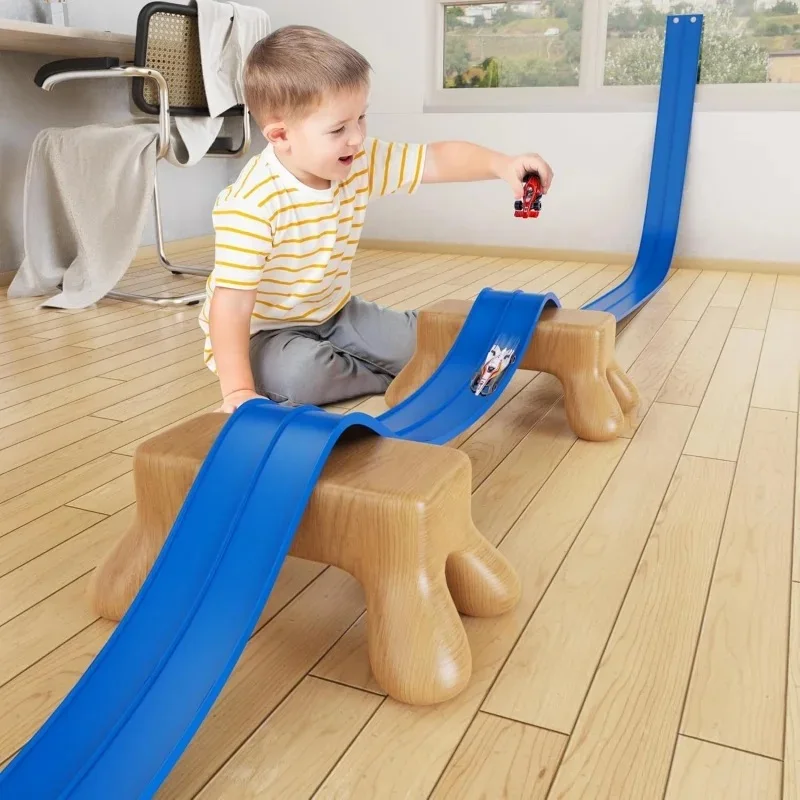
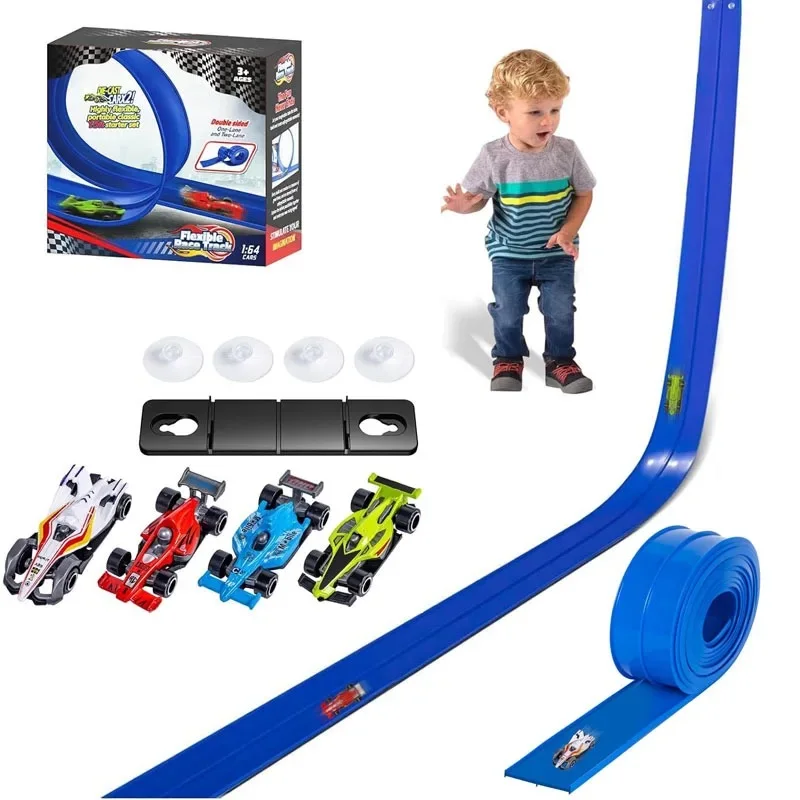
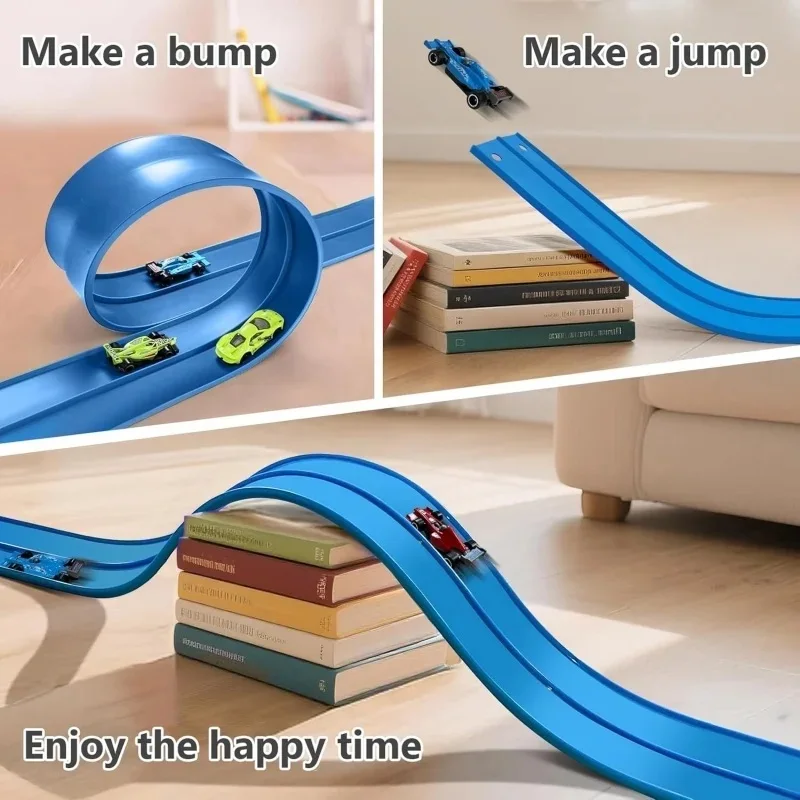
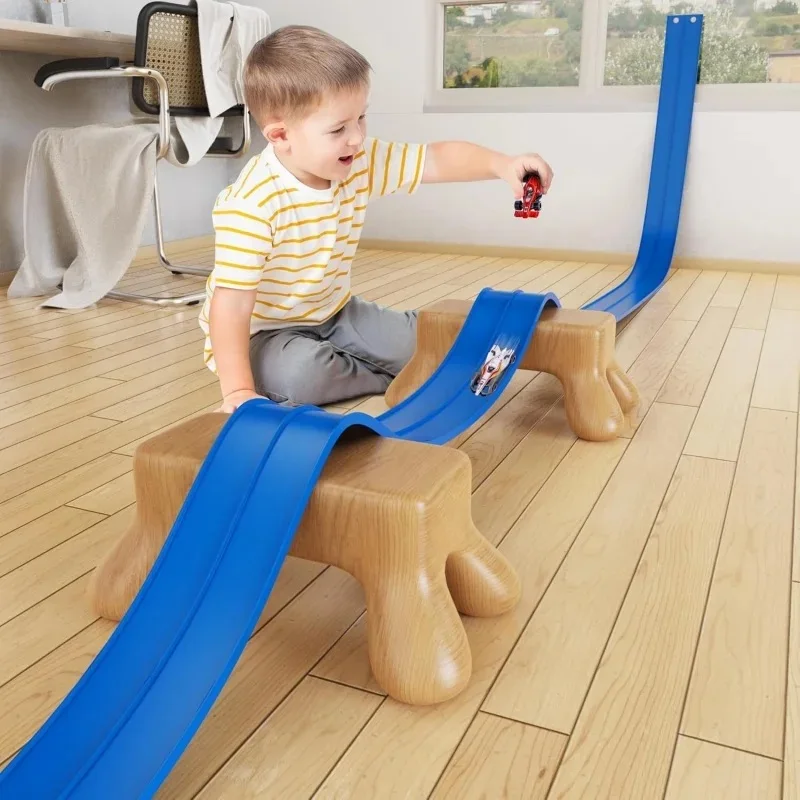
The beauty of a Hot Wheels suspension bridge is that it doesn’t demand specialized parts to be effective. Yes, some official Hot Wheels sets feature bridge components, but kids often improvise. Books become cliffs, coffee tables become canyon walls, and chairs stand in as skyscrapers. The track runs from one elevated point to another, forming the basic “span” of the bridge. Added supports—taped strings, LEGO pillars, or additional track risers—give it the visual and functional feel of a suspension structure.
Design trade-offs naturally emerge. A higher bridge looks more dramatic but needs stronger support. A longer central span allows for spectacular jumps onto or off the bridge but is more prone to sagging or collapse. Shorter spans are sturdier but less visually impressive. Kids learn quickly that a small tweak in angle or a slight shift in where a support sits can mean the difference between a perfect run and a pile of track on the floor.
From Stunt Track to STEM Lab
A Hot Wheels suspension bridge is not just a flashy stunt; it’s a STEM lesson disguised as play. As kids experiment with different builds, they cycle through the scientific method: they form hypotheses (“If I make the bridge higher, the cars will go faster”), test them (launch the car), observe results (the car falls off the side), and revise their design (add guardrails or adjust the angle). This process is iterative, driven by curiosity rather than a worksheet or assignment.
This kind of open-ended tinkering builds critical thinking. When a car slows down halfway across the bridge, a child might notice that the incline is too steep at the start, or that there’s a bump where two pieces of track connect on the suspended span. When the bridge sags excessively, they may try to shorten the span or add extra supports near the center. In essence, they’re learning to troubleshoot complex systems—an invaluable skill in any technical field.
Even more importantly, the bridge invites collaboration. One child might focus on stabilizing the towers while another adjusts the angle of the ramp leading onto the bridge. They negotiate whose idea to try first, explain their reasoning, and celebrate shared successes. The bridge becomes a focal point for social learning as well as scientific exploration.
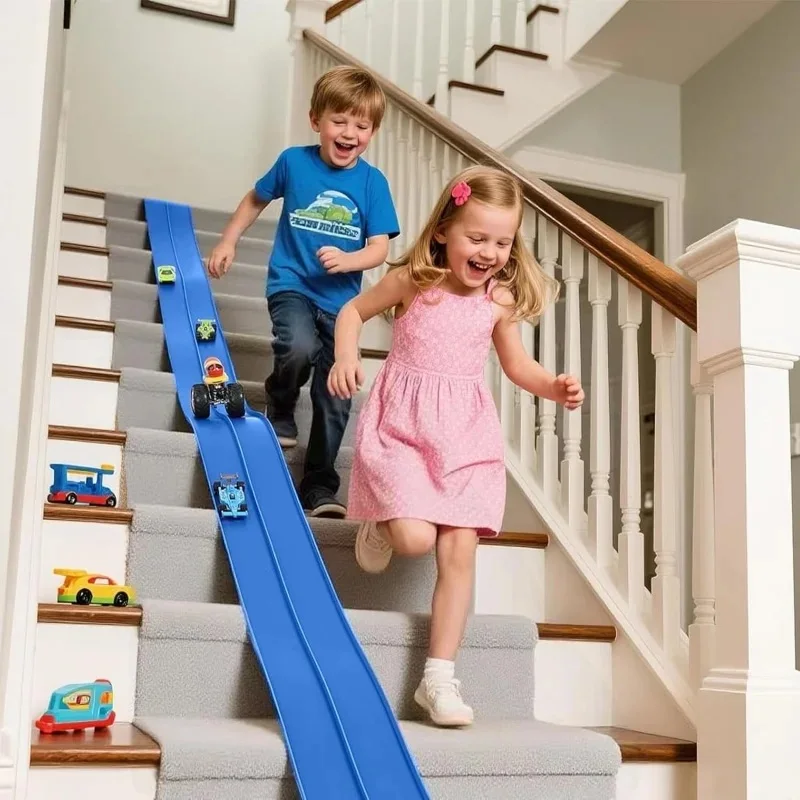
Building Better Bridges: Creativity in Action
Simple Tweaks That Change Everything
Once a basic suspension bridge is working, the real fun begins: modifying it. Small changes to the design can transform the way the track behaves. Adding side rails or guard walls helps keep cars from flying off during tight turns. Slightly banking the track on the bridge—raising one edge—can let cars take a curve at higher speed without tumbling over the side. A few extra supports near the center can reduce wobble and allow for heavier or faster vehicles.
Kids also quickly discover the importance of smooth transitions. The joints where regular track meets the suspended section often become bottlenecks. A small misalignment can stop a car in its tracks. Adjusting these joints—shifting a connector, propping up one end with a block, or re-routing the approach—teaches precision and patience. It’s an intuitive lesson in tolerances and alignment that mirrors real-world engineering challenges.
Turning Design Challenges into Storytelling
Beyond physics, a suspension bridge track invites narrative. Suddenly, the living room floor is a river gorge or a sprawling city. The bridge might be “under construction,” forcing cars to detour, or “under attack,” requiring a daring high-speed crossing. Kids integrate their bridge into broader play scenarios: rescue missions, races, time trials, or even crash tests designed to see how much punishment the bridge can take before it fails.
Adults can leverage this storytelling to deepen engagement. A simple prompt—“What happens if a storm hits the bridge?”—can lead kids to design wind barriers, alternate routes, or extra supports. Questions like “How many cars can be on the bridge at once before it breaks?” turn play into a hands-on exploration of load limits. In this way, a Hot Wheels suspension bridge becomes an evolving narrative artifact: its design changes as the story unfolds, and the story changes as the design improves.
Why This Tiny Bridge Matters
On the surface, a Hot Wheels suspension bridge is a toy configuration—just another way to rearrange orange track. But look closer and it becomes a compact model of how people learn. It transforms an ordinary stretch of track into a challenge that demands planning, experimentation, and reflection. Kids don’t just race cars; they design systems, anticipate outcomes, and adapt when reality doesn’t match their expectations.
In a world where screens often dominate attention, the tactile, problem-solving nature of a suspension bridge track is especially valuable. It encourages kids to move, build, test, and rebuild. It rewards persistence and creativity rather than rote repetition. And it subtly conveys that complex structures—bridges, buildings, even entire cities—are the result of many small decisions, tested and refined over time.

So can a Hot Wheels suspension bridge turn playtime into an engineering adventure? Absolutely. With a handful of track pieces, a few makeshift supports, and a willingness to experiment, the bridge becomes more than a route from point A to point B. It becomes a pathway into curiosity itself, connecting imagination and real-world understanding one speeding car at a time.