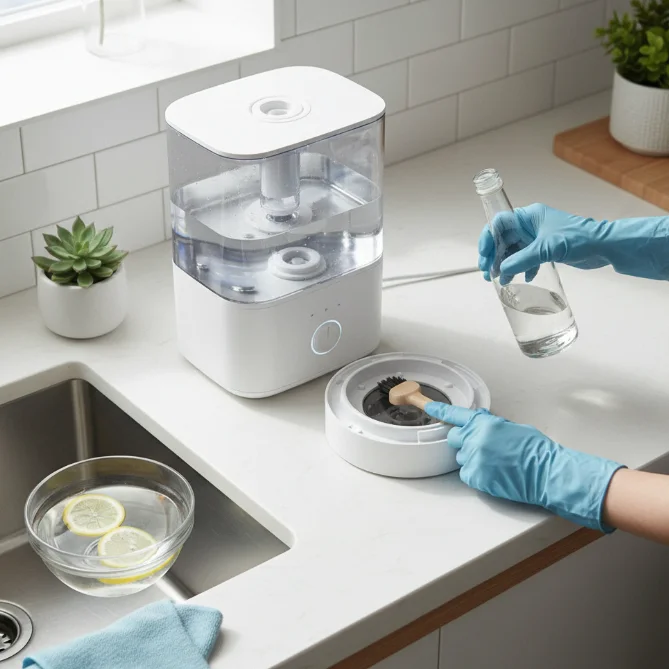
Picture this: It’s a dry winter night. You turn on your humidifier for relief from chapped lips and scratchy throats. But instead of clean moisture, you’re inhaling a fine mist laced with white mineral dust, slimy biofilm, or even mold spores.
This isn’t hypothetical. According to the U.S. Environmental Protection Agency (EPA), poorly maintained humidifiers can become reservoirs for bacteria, fungi, and endotoxins—all of which can trigger allergies, asthma attacks, or even serious respiratory infections like Legionnaires’ disease.
And no, just rinsing with tap water won’t cut it. Nor will dousing it in bleach (more on that later).
Cleaning your humidifier isn’t a chore—it’s a health safeguard. Done right, it ensures the air in your home stays as pure as the moisture it adds.
In this guide, we’ll walk you through safe, effective, type-specific cleaning methods, backed by manufacturer guidelines, EPA recommendations, and real-world testing. Whether you own an ultrasonic, evaporative, or warm mist model, you’ll learn exactly how to clean it—without damaging it.
Let’s get started.
Before You Start: Know Your Humidifier & Gather Supplies
🔍 Step 1: Identify Your Humidifier Type
Not all humidifiers work the same—and cleaning them the same way can cause damage. Here’s how to tell yours apart:
| Type | How It Works | Key Cleaning Concerns |
|---|---|---|
| Ultrasonic | Uses high-frequency vibrations to create cool mist | Delicate vibrating diaphragm; prone to mineral buildup (white dust) |
| Evaporative | Fan blows air through a wet wick/filter | Filter traps mold/bacteria; needs regular replacement or cleaning |
| Warm Mist / Steam | Boils water to produce steam | Heating element scales up quickly; risk of burns if not cooled |
💡 Quick ID Tip:
- If it runs silently and leaves white powder on furniture → Ultrasonic.
- If it has a visible filter and makes fan noise → Evaporative.
- If it emits warm vapor and takes time to heat up → Warm Mist.
📘 Step 2: Check Your Owner’s Manual
Always consult your manual first. Manufacturers specify:
- Which parts are dishwasher-safe (spoiler: almost never)
- Whether vinegar or hydrogen peroxide is approved
- Special warnings (e.g., “Do not immerse base unit”)
Ignoring these can void your warranty—or worse, ruin your device.
🧼 Essential Cleaning Supplies (Safe & Effective)
✅ Use These:
- White distilled vinegar (5% acidity): Best natural descaler
- Baking soda: Gentle abrasive for odors and film
- 3% hydrogen peroxide: Powerful disinfectant (for mold/mildew)
- Soft-bristle brush (an old toothbrush works perfectly)
- Microfiber cloth or sponge
- Cotton swabs (for tight spots)
- Rubber gloves
❌ Never Use:
- Bleach (unless explicitly allowed—and even then, rinse extremely well)
- Abrasive scrubbers (steel wool, stiff brushes)
- Essential oils (they coat internal parts and promote gunk buildup)
- Undiluted acids or commercial lime removers
⚠️ Important: Never run vinegar or cleaning solutions through your humidifier. This aerosolizes chemicals into your breathing air—a major health hazard.
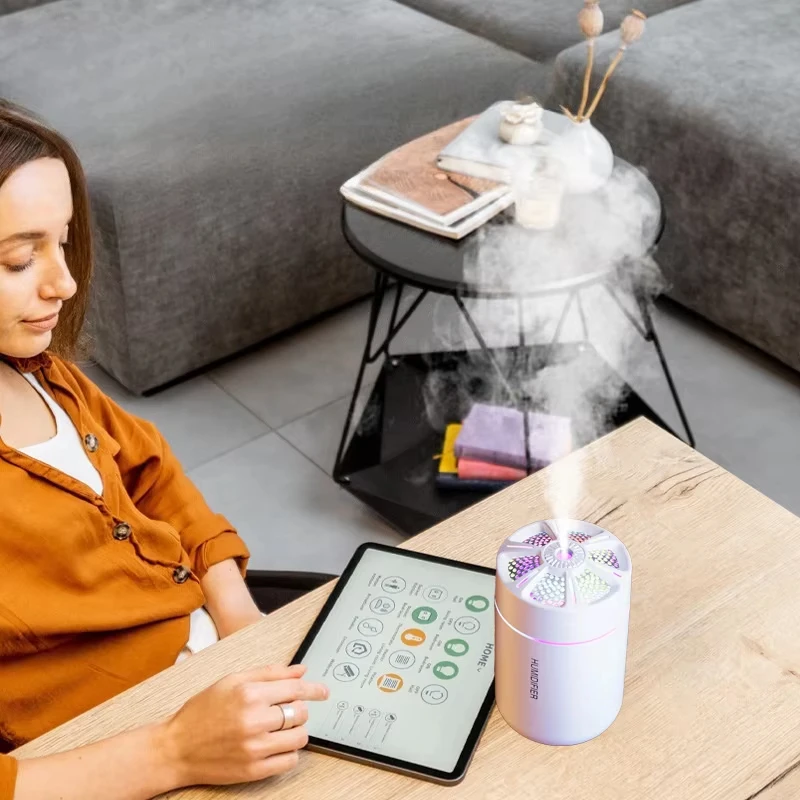
Step-by-Step Deep Cleaning Guide (By Type)
Frequency reminder: Do a full deep clean once a week during use. Rinse and dry daily.
A. Ultrasonic/Cool Mist Humidifiers
These are the most common—but also the most sensitive due to their ultrasonic diaphragm.
✅ Step-by-Step:
- Unplug and disassemble completely: Remove tank, base, cap, and any removable trays.
- Soak tank & base in a 1:1 mix of white vinegar and water for 30–60 minutes. For heavy scale, soak up to 2 hours.
- Gently scrub with a soft brush. Focus on corners, seams, and the water level sensor.
- Clean the diaphragm: Dip a cotton swab in vinegar and lightly wipe the metal disc at the bottom of the base. Never scrape or poke it—it’s fragile!
- Rinse thoroughly under running water until no vinegar smell remains.
- Air-dry completely (at least 4–6 hours) before reassembling.
💡 Pro Tip: To reduce white dust, switch to distilled or demineralized water. It cuts mineral deposits by over 90%.
B. Evaporative Humidifiers (With Filters)
The filter is the heart—and the biggest contamination risk.
✅ Step-by-Step:
- Unplug and take apart: Remove tank, base, and filter.
- Clean tank & base using the same vinegar soak method as above.
- Handle the filter carefully:
- Inspect the filter: If it’s stiff, discolored, or smells musty, replace it.
- Wipe the fan blades and housing with a damp microfiber cloth or soft brush.
- Dry all parts fully before reassembly—especially the filter.
🌬️ Note: A damp filter left inside = instant mold factory. Always remove it when not in use for >24 hours.
C. Warm Mist / Steam Vaporizers
These boil water, so scale builds up fast on the heating element.
✅ Step-by-Step:
- Unplug and let cool completely (wait 1–2 hours after last use).
- Pour 1–2 cups of undiluted white vinegar into the water chamber.
- Let sit for 30–60 minutes (or follow manual instructions—some allow a “vinegar boil cycle”).
- Scrub gently around the heating coil with a soft brush. Do not bend or damage the coil.
- Rinse 3–4 times with fresh water to remove all vinegar residue.
- Wipe exterior with a damp cloth. Air-dry fully before next use.
🔥 Warning: Never add vinegar while the unit is hot or plugged in. Thermal shock can crack the chamber.
Answering Your Top Questions (FAQs)
❓ Q1: How often should I clean my humidifier?
- Daily: Empty leftover water, rinse tank, and leave open to air-dry.
- Weekly: Full deep clean (vinegar soak + disinfection).
- Hard water areas? Clean every 3–4 days.
❓ Q2: Can I use bleach to clean my humidifier?
Generally, no. The CDC and EPA advise against it unless specified by the manufacturer. Bleach fumes are respiratory irritants, and residue is nearly impossible to fully rinse. Vinegar or hydrogen peroxide are safer and equally effective.
❓ Q3: How do I remove stubborn white mineral deposits?
- Soak in vinegar overnight.
- Use a soft nylon brush (not metal!).
- For severe cases, try a humidifier descaling tablet (e.g., Affresh)—but always rinse 3+ times.
- Prevention: Use distilled water. It’s cheap insurance.
❓ Q4: My humidifier smells bad/musty! What do I do?
This signals microbial growth. Immediately:
- Disassemble.
- Soak parts in 1:1 vinegar + water + 1 tbsp baking soda for 1 hour.
- OR use 3% hydrogen peroxide (soak 30 mins, then rinse thoroughly).
- Replace the filter if present.
- Dry completely before reuse.
❓ Q5: Is it safe to run vinegar through my humidifier?
Absolutely not. Running vinegar through the machine releases acetic acid vapor, which can irritate eyes, throat, and lungs—and may corrode internal components. Vinegar is for soaking only, never operation.
Pro Tips for Maintenance & Prevention
Keep your humidifier running cleanly with these habits:
- After each use: Empty water, rinse tank, and leave lid open to dry.
- Use distilled or demineralized water: Reduces scale, white dust, and maintenance by 70%+.
- Never add essential oils unless your model is specifically designed for them (most aren’t).
- Store properly: When not in use for weeks, clean thoroughly, dry completely, remove filters, and store in a breathable bag (not sealed plastic).
🌿 Bonus: Place a hygrometer in your room. Keep humidity between 30–50%. Higher levels encourage mold—even with a clean humidifier.
Conclusion: Clean Humidifier, Healthy Air
A humidifier should relieve your dry skin and congestion—not cause coughing, allergies, or worse. By spending just 10–15 minutes a week on proper cleaning, you transform it from a hidden health risk into a true wellness tool.
This isn’t just about appliance care. It’s about protecting your family’s lungs.
👉 Your action step: Right now, unplug your humidifier. Give it a quick inspection. If it’s been more than 5 days since your last clean—do it tonight.
Your nose, your kids, and your future self will thank you.