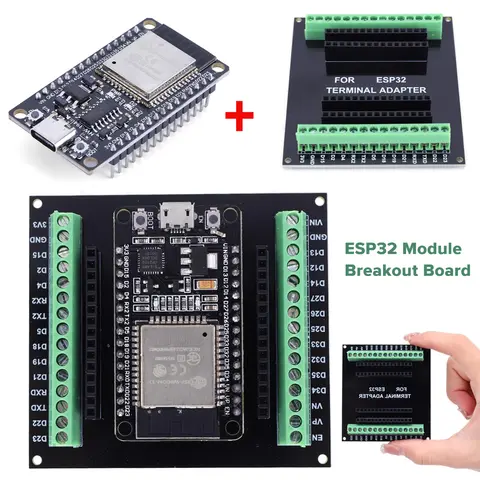
The main advantage of using a breakout board is that it simplifies the process of connecting external components to a microcontroller, which can be time-consuming and error-prone if done manually. Breakout boards typically have headers, sockets, or connectors that are compatible with common electronic components, allowing users to plug them in without the need for soldering or wiring.
In this article, we will discuss the features, types, applications, and advantages of breakout boards in detail.
Features of Breakout Boards:
Breakout boards have different features depending on the type of microcontroller or component they are designed for. However, some common features of breakout boards are:
Headers: Breakout boards usually have headers that provide access to the pins of the microcontroller or component. These headers can be male or female and have different numbers of pins depending on the device's package.
Connectors: Breakout boards can have various types of connectors, such as USB, Ethernet, HDMI, and audio jacks, that allow users to connect the board to external devices or networks.
Voltage Regulation: Breakout boards may have voltage regulators that provide stable and regulated power to the microcontroller and external components. This feature is essential for preventing voltage spikes or drops that can damage or affect the performance of the system.
LEDs: Breakout boards may have LEDs that indicate the status of the device, such as power, activity, or error. These LEDs can help users diagnose problems and monitor the system's behavior.
Onboard Memory: Some breakout boards may have onboard memory, such as flash or EEPROM, that can be used to store data, firmware, or configuration settings.
Types of Breakout Boards:
There are various types of breakout boards available on the market, each designed for a specific microcontroller or component. Here are some common types of breakout boards:
Arduino Breakout Boards: Arduino is a popular open-source platform for building electronic projects. Arduino breakout boards are designed to interface with Arduino boards and provide access to the pins and connectors of the board. These boards can be used to connect sensors, motors, displays, and other components to the Arduino.
Raspberry Pi Breakout Boards: Raspberry Pi is a credit card-sized computer that can be used for various applications, such as media centers, servers, and robots. Raspberry Pi breakout boards are designed to expand the Pi's capabilities by providing access to the GPIO pins, camera connector, and other interfaces.
Sensor Breakout Boards: Sensor breakout boards are designed to interface with various sensors, such as temperature, humidity, light, and motion sensors. These boards usually have headers or connectors that are compatible with the sensor's pins, and voltage regulators or level shifters that adjust the signals to match the microcontroller's requirements.
Communication Breakout Boards: Communication breakout boards are designed to interface with various communication modules, such as Wi-Fi, Bluetooth, GPS, and RFID modules. These boards usually have connectors or headers that are compatible with the module's interface, and voltage regulators or level shifters that adjust the signals to match the microcontroller's requirements.
Applications of Breakout Boards:
Breakout boards have various applications in different fields, such as:
Education: Breakout boards are used in schools and universities to teach students about electronics, microcontrollers, and programming. These boards provide a hands-on experience that helps students understand the concepts and principles of electronic systems.
Prototyping: Breakout boards are used by engineers and designers to prototype and test electronic systems before manufacturing them. These boards allow users to quickly connect and test different components and interfaces without the need for custom PCBs.
DIY Projects: Breakout boards are used by hobbyists and makers to build DIY projects, such as robots, drones, smart homes, and wearable devices. These boards provide a flexible and customizable platform that allows users to add or remove components as needed.
Research: Breakout boards are used in research projects that require interfacing with external sensors, actuators, or communication modules. These boards provide a convenient and reliable way to collect and analyze data from the environment or other systems.