










Results for flash memory programmer
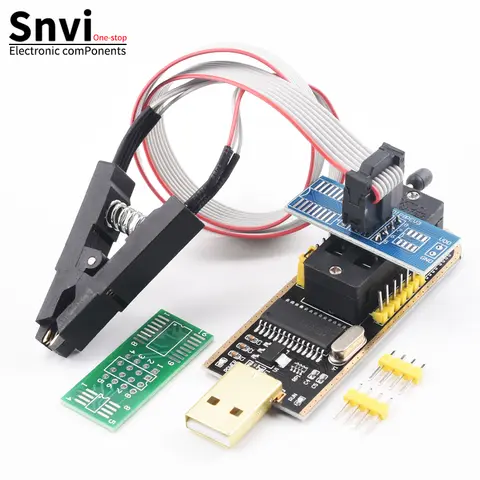
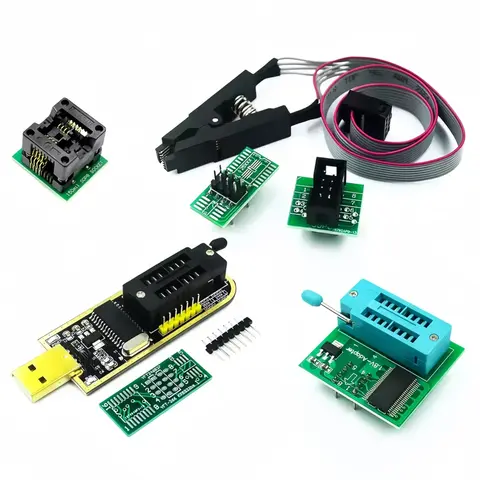
When searching for a flash memory programmer, buyers are typically looking for a reliable, versatile, and technically capable tool to program, read, write, and repair flash memory chips used in automotive ECUs, SRS airbag systems, and embedded microcontrollers. These tools are essential for professionals and hobbyists involved in vehicle diagnostics, chip tuning, firmware updates, and electronic repairs. The right flash memory programmer should support multiple protocols, offer compatibility with a wide range of memory types, and deliver consistent performance under real-world conditions.
For users seeking a robust solution, the FormulaFLash ECU TCU Chip Tuning Programmer stands out with its OBD-II interface, online update capability, and 1-year warranty. It supports BOOT mode programming, making it ideal for advanced ECU tuning and repair. The tool is packaged in a durable suitcase, ensuring safe transport and organization of accessories.
Alternatively, the UltraProg Full Kit offers comprehensive support for commercial EEPROMs and microcontrollers with full protocol coverage: JTAG, I2C, Microwire, SPI, BDM, and BKGD. It supports multiple languages (English, French, Spanish, etc.) and is trusted by professionals for SRS airbag repairs. Its compact design and precise programming accuracy reduce the risk of data corruption.
For users needing portability and modern connectivity, the BINGJU Smart Card Reader (though not a full flash programmer) offers Bluetooth compatibility and supports smart cards, SIMs, and ID cards—ideal for mobile diagnostics and data access.
To ensure success with your flash memory programming tasks:
With the right flash memory programmer, you gain the power to diagnose, repair, and enhance electronic systems with confidence and precision.
- Flash Memory Programmer
- A specialized electronic device used to read from, write to, and erase data stored in flash memory chips, commonly found in automotive control units (ECUs), airbag modules (SRS), and embedded systems. It enables firmware updates, repair of corrupted data, and customization of vehicle performance settings.
- Supported Protocols
- Communication interfaces such as JTAG, I2C, SPI, Microwire, BDM, and BKGD allow the programmer to interface with various microcontrollers and EEPROMs. Full protocol support ensures compatibility across a wide range of vehicle makes and models.
- BOOT Mode (Bench Mode)
- A programming method that allows direct access to a device’s firmware through a physical interface (e.g., USB or serial), bypassing the need for in-vehicle diagnostics. This is crucial for repairing or updating ECUs when the vehicle’s system is unresponsive.
For users seeking a robust solution, the FormulaFLash ECU TCU Chip Tuning Programmer stands out with its OBD-II interface, online update capability, and 1-year warranty. It supports BOOT mode programming, making it ideal for advanced ECU tuning and repair. The tool is packaged in a durable suitcase, ensuring safe transport and organization of accessories.
Alternatively, the UltraProg Full Kit offers comprehensive support for commercial EEPROMs and microcontrollers with full protocol coverage: JTAG, I2C, Microwire, SPI, BDM, and BKGD. It supports multiple languages (English, French, Spanish, etc.) and is trusted by professionals for SRS airbag repairs. Its compact design and precise programming accuracy reduce the risk of data corruption.
For users needing portability and modern connectivity, the BINGJU Smart Card Reader (though not a full flash programmer) offers Bluetooth compatibility and supports smart cards, SIMs, and ID cards—ideal for mobile diagnostics and data access.
To ensure success with your flash memory programming tasks:
- Verify that your chosen programmer supports the specific memory type and protocol used in your target device.
- Always back up original firmware before making changes.
- Use a stable power source and avoid interrupting the programming process.
- Update firmware regularly via official channels to maintain compatibility and security.
- Choose tools with clear documentation and customer support—especially for complex repairs.
With the right flash memory programmer, you gain the power to diagnose, repair, and enhance electronic systems with confidence and precision.